


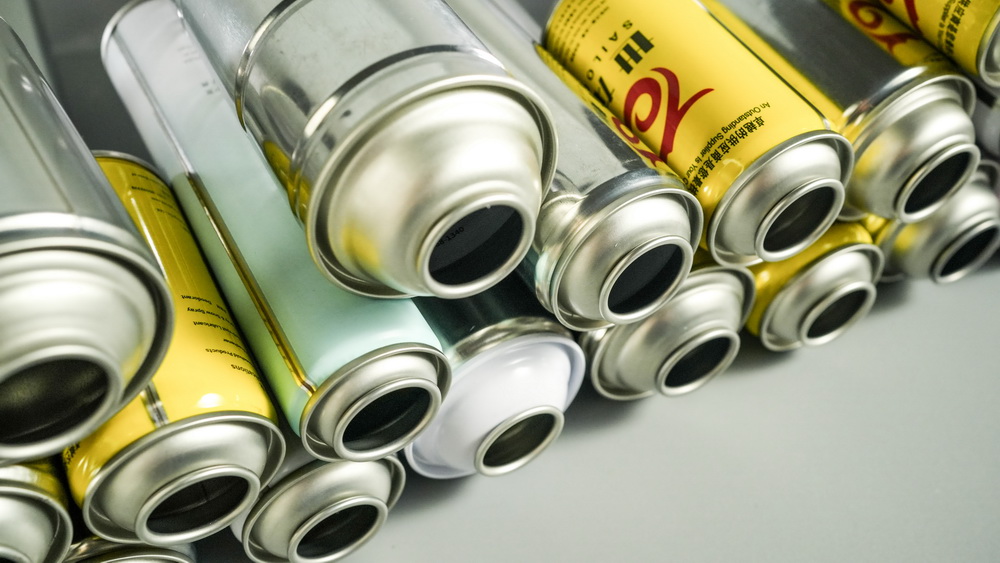
UN 2Q Certification & US DOT for Aerosol Tin Cans: What Buyers Must Know Before Exporting to the US and EU
Every year, aerosol shipments are stopped at US and EU ports — not because the product inside failed, but because the empty can outside it was never certified in the first place. For importers, filling plants and brand owners, the difference between a container that clears customs and one that gets detained often comes down to three letters and one number: UN 2Q.
If you are sourcing Aerosol Tin Cans from overseas — especially from Asia — this guide walks you through what UN 2Q and US DOT certification actually cover, which tests your cans must pass, what markings to look for, and the exact documents to request from your supplier before the first pallet ships.
What Does UN 2Q Actually Mean?
Aerosol Cans are legally classified as pressure vessels, not simple packaging. Under the UN Model Regulations (which both US DOT 49 CFR and European ADR/RID/IMDG frameworks are built on), every metal aerosol can placed on the market must conform to packaging specification 2Q — the recognized standard for metal aerosol dispensers.
In practical terms, a 2Q-certified aerosol tin can has passed a defined set of design-type tests, including:
- Leak test — every can must be pressure-tight under test conditions.
- Hydraulic pressure test — the can body and seams must withstand pressures well above the operating pressure of the filled product.
- Burst pressure test — the can must deform and burst at controlled, predictable thresholds. For standard-construction components, deform pressure of ≥1.3 MPa and burst pressure of ≥1.5 MPa are the industry baseline; high-pressure cans must exceed this.
- Drop test — filled cans must survive drops from a defined height without leaking or rupturing.
What this means for you as a buyer: a can that merely "looks strong" is not a certified can. Certification is documented, testable, and auditable — and it is the foundation of your own legal compliance as the shipper of record.
US DOT 2Q: The Non-Negotiable for the American Market
For shipments into the United States, the Department of Transportation (DOT) enforces the 2Q specification through 49 CFR 178.360. A compliant aerosol tin can must be produced under a DOT-registered quality program, and the certification mark must be permanently stamped or lithographed on the can itself — typically on the base.
When you request samples from a supplier, turn the can over. If there is no DOT mark, the can is not certified for the US market, no matter what the sales contract says. Insurance claims and customs detentions in the US almost always trace back to this single missing element.
Buyers should also understand the difference between:
- A one-time certification on a drawing in a PDF — worthless on its own.
- Ongoing, batch-level compliance — a certified manufacturer runs pressure and leak testing on every production batch and can produce test records for the exact lot you purchased.
Only the second protects you. When auditing a supplier, ask to see batch test records, not just the certificate.
Entering the EU: UN1950, ADR and Limited Quantities
For the EU market, aerosols are generally shipped as UN1950 articles under ADR (road), RID (rail) and IMDG (sea). Most filled consumer aerosols move under Limited Quantity provisions, which relax some transport requirements — but only when the packaging itself is certified and undamaged.
Key points for EU-bound shipments:
- The empty aerosol tin can must conform to the 2Q design-type standard, with test documentation available on request.
- Your filling plant in the EU (or your contract filler) will rely on your can certification to complete their own dangerous goods declarations.
- Sea freight exposes cans to humidity and pressure cycling — certification plus proper packing (a separate topic we cover in our ocean freight protection guide) determines whether the goods arrive saleable.
In short: certification is not paperwork overhead. It is what allows the entire downstream supply chain — freight forwarders, fillers, retailers — to move your product legally.
5 Documents to Demand Before Placing Your Order
A professional aerosol tin can manufacturer will never hesitate to provide the following. If any of these requests triggers delays or vague answers, treat it as a red flag:
- UN 2Q / DOT 2Q design-type test report for the exact can specification (diameter, height, pressure class) you are buying.
- Batch pressure and leak test records tied to production lots.
- Copies of the certification marks as they appear on the can base.
- ISO 9001 certificate of the manufacturing facility — the quality system behind batch consistency.
- Third-party inspection reports (SGS, TÜV or equivalent), especially for first orders.
We have written before about the 5 non-negotiable quality control points when choosing an aerosol can supplier — certification verification is point zero that comes before all of them.
High-Pressure Products Raise the Bar
Standard 2Q compliance covers normal-pressure and typical household formulations. But if your product line includes refrigerant gases, butane cartridges, or aggressive solvent-based cleaners, the pressure class of the can becomes even more critical — and so does the certification scope.
A refrigerant-grade or butane-grade high-pressure necked-in aerosol tin can must demonstrate burst margins significantly above standard cans, and the test report must reflect that exact construction, not a "similar" one. Never accept a certificate issued for a 52mm can to cover a 65mm straight-wall order — specifications do not transfer across sizes or structures.
Frequently Asked Questions
Does the DOT mark need to be on every single can? Yes. The certification mark is part of the can design and is printed or stamped during manufacturing. Cans without the mark cannot legally be filled and shipped into the US as aerosols.
Can one certificate cover my whole product range? No. Certification is specific to can diameter, height, construction and pressure class. Each distinct specification needs its own test report.
Who is legally responsible — the can maker or the filler? Both carry obligations, but as the buyer and shipper of record, you must be able to prove your packaging was certified. That is why retaining your supplier's test documentation is not optional.
How do I verify a Chinese supplier's DOT claim? Ask for the DOT-registered mark sample, batch test records, and — ideally — commission a third-party factory audit. A transparent manufacturer will offer these proactively.
The Bottom Line
UN 2Q and DOT compliance is the cheapest insurance you will ever buy for your aerosol business. The cost difference between a certified and a non-certified aerosol tin can is marginal; the cost difference between a shipment that clears customs and one that is detained is measured in tens of thousands of dollars — plus the distributor relationships you may never recover.
SAILON has operated under ISO 9001 and US DOT certification for years, with batch-level pressure and leak testing built into every production line. If you are preparing a US or EU launch and need a certified specification confirmed for your formula, talk to our engineering team — send us your product type, fill volume and propellant, and we will recommend the right certified construction within 48 hours.